Most people choose a massage style by name — Thai, Swedish, deep tissue — without necessarily knowing what the therapist is actually doing differently between them, or why one style leaves you relaxed while another leaves your muscles sore in a good way the next day. This guide goes a level deeper than our complete guide to international massage styles in Bahrain: the specific techniques behind each style, the real physiological benefits they’re linked to, and the safety considerations worth knowing before you book.
What Are International Massage Styles?
International massage styles are bodywork traditions that originated in different parts of the world — Sweden, Thailand, India, the wider Gulf region — each built around a distinct combination of pressure, technique, and intention. What separates one style from another isn’t just culture or branding; it’s genuinely different hand techniques, different use of oil or heat, and different goals, from pure relaxation to targeted pain relief.
Why Massage Styles Differ Around the World
Massage traditions typically developed alongside a region’s broader medical or wellness philosophy. Ayurvedic massage grew out of India’s Ayurvedic medicine system, which views the body through the lens of individual constitution and balance. Thai massage developed alongside yoga and Buddhist medicine, emphasizing energy lines and assisted movement over stillness. Swedish massage, by contrast, was developed in 19th-century Europe with a more anatomical, muscle-focused approach. Arabic and Moroccan massage evolved from regional bathing rituals — the hammam — where cleansing and bodywork were treated as a single combined practice. Understanding this background helps explain why, for example, Thai massage feels closer to assisted yoga while Swedish massage feels closer to what most people picture when they hear the word “massage.”
Popular International Massage Styles
Swedish Massage
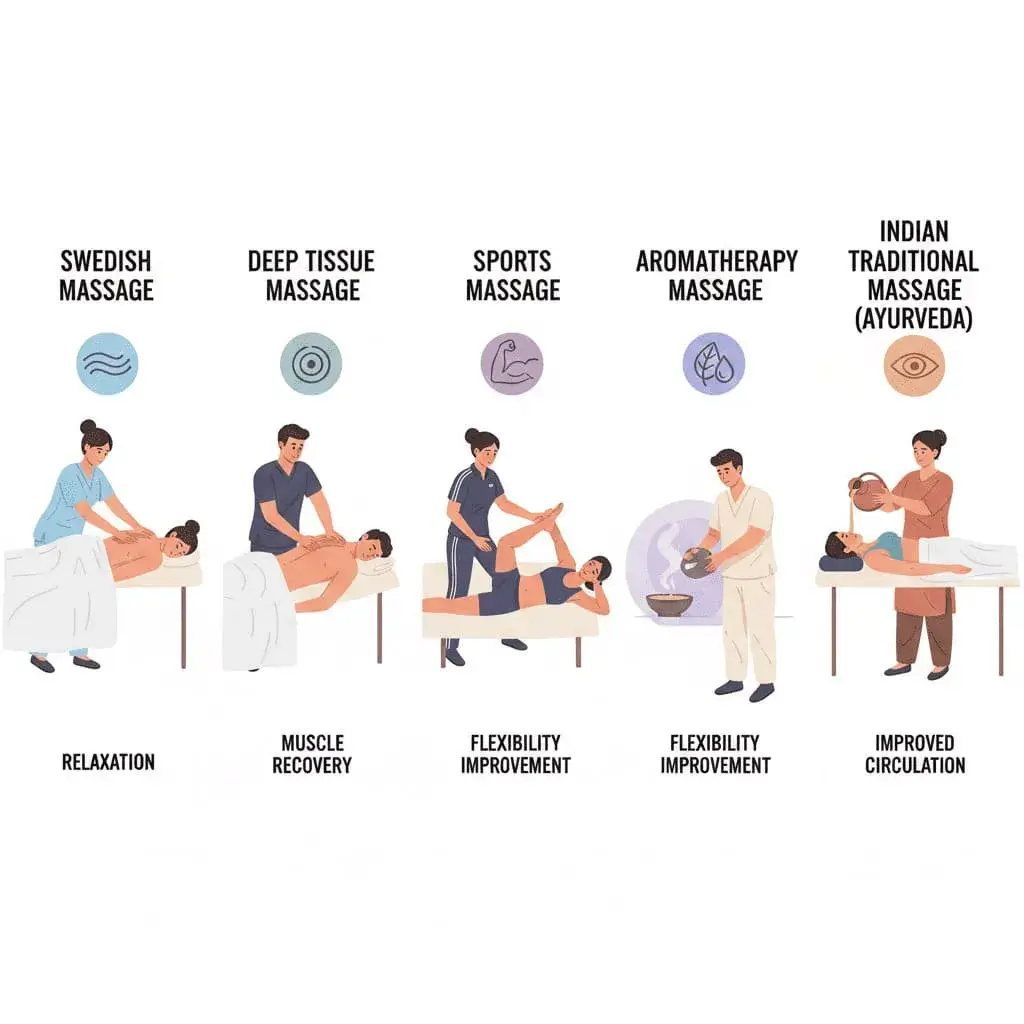
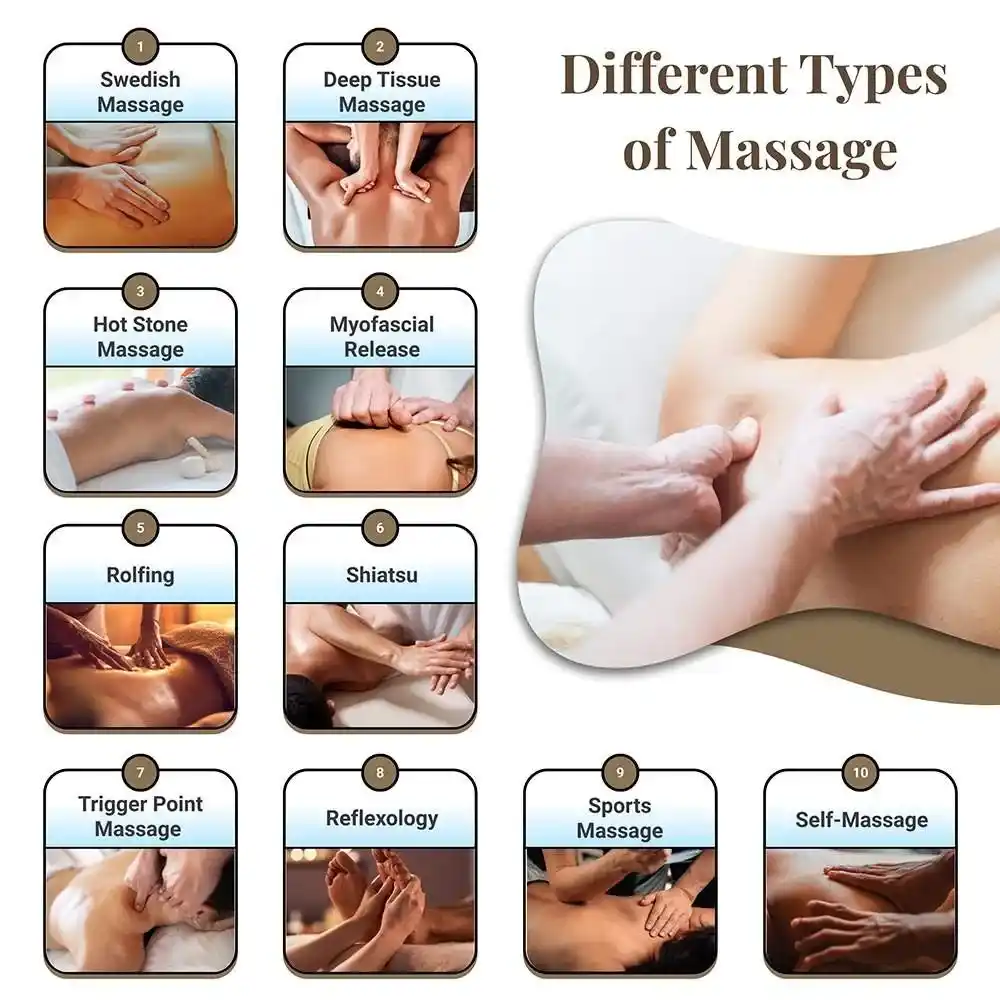
Built on long, flowing strokes (effleurage) combined with kneading (petrissage), Swedish massage is applied with oil at light-to-medium pressure. The technique is designed to warm up muscle tissue gradually and encourage blood flow, which is part of why it’s considered the most broadly relaxing style rather than a therapeutic deep-tissue treatment.
Thai Massage
Thai massage uses compression and assisted stretching along the body’s sen (energy) lines, performed on a floor mat with the client clothed and no oil involved. The therapist uses their hands, knees, legs, and feet to move the client’s body into yoga-like stretches, which is why it’s often described as more physically active than other massage styles.
Deep Tissue Massage
Deep tissue massage applies slow, sustained pressure using the fingers, knuckles, or elbows to reach deeper muscle layers and connective tissue (fascia). The goal is to release chronic tension and break up adhesions — the “knots” that form in overused or stressed muscle — rather than to relax the body broadly.
Sports Massage
Sports massage combines deep tissue techniques with active and passive stretching, and is typically timed around athletic activity: pre-event sessions focus on warming up muscles and improving mobility, while post-event sessions focus on flushing metabolic waste from tissue and reducing delayed-onset soreness.
Hot Stone Massage
Heated basalt stones are placed on the body or used directly by the therapist to apply deep pressure. The heat causes blood vessels to dilate, which can allow muscles to release tension faster than they would under a standard massage, without the intensity of manual deep tissue work.
Aromatherapy Massage
Aromatherapy massage layers Swedish-style techniques with essential oils selected for specific effects — lavender for calming, peppermint for alertness, eucalyptus for a sense of clearer breathing. The massage technique itself is usually gentle, since the treatment’s core value is considered to come from the combination of touch and scent rather than pressure alone.
Ayurvedic Massage
Ayurvedic massage uses warm herbal oils applied in long, rhythmic strokes, often tailored to the client’s dosha (body-mind constitution) under Ayurvedic theory. Techniques like Shirodhara — a slow, continuous stream of warm oil poured over the forehead — are designed to work on a deeper relaxation level than muscle manipulation alone.
Arabic Massage
Arabic massage typically combines firm kneading and compression with regionally sourced oils, often preceded by a steam or hammam-style warm-up that helps loosen muscles before the massage itself begins. The overall approach tends to be more direct and firm than Swedish massage, without the intensity of full deep tissue work.
Moroccan Massage
Centered on the traditional hammam ritual, Moroccan massage begins with steam exposure, followed by exfoliation using black soap and a kessa glove, and finishes with a full-body massage. The technique itself is secondary to the overall ritual — it’s as much about skin renewal and deep cleansing as it is about muscle relaxation.
Reflexology (Foot Massage)
Reflexology applies precise thumb and finger pressure to specific zones on the feet believed to correspond to different organs and body systems. No oil is typically used, and the technique relies on targeted, repeated pressure rather than broad strokes across the body.
Head & Scalp Massage
Focused on the scalp, temples, and neck, head massage combines circular pressure and light kneading to relieve tension that builds up in the upper body, particularly around the base of the skull and shoulders — a common source of stress-related headaches.
Benefits of Different Massage Styles
Stress Relief
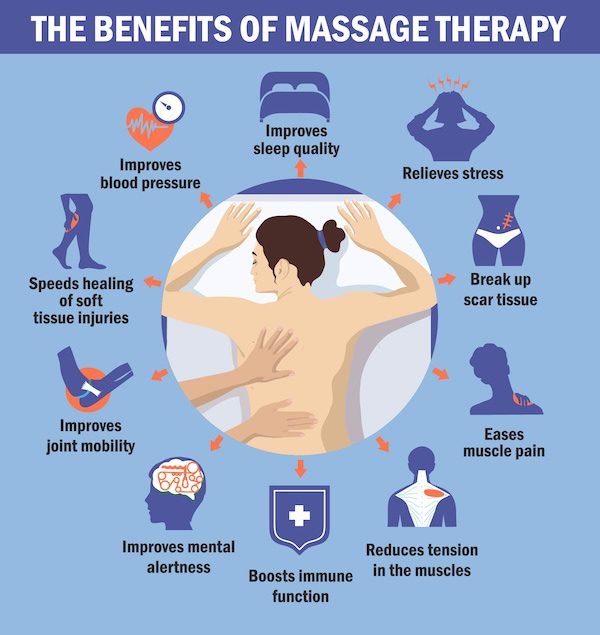
Swedish and aromatherapy massage are most closely associated with stress relief, largely through their calming, moderate-pressure technique combined with a quiet, controlled environment.
Muscle Recovery
Sports and deep tissue massage support muscle recovery by helping clear metabolic buildup in overworked tissue and reducing the intensity of delayed-onset muscle soreness after activity.
Better Blood Circulation
Nearly all massage styles support circulation to some degree, but hot stone and Swedish massage are particularly associated with this benefit due to the combination of heat, pressure, and stroke direction typically applied toward the heart.
Improved Flexibility
Thai massage’s assisted stretching technique makes it the clearest choice for anyone specifically working on flexibility or range of motion, more so than styles built around static pressure.
Better Sleep
Deep relaxation styles like Swedish, hot stone, and Ayurvedic massage are commonly reported to support better sleep afterward, largely as a downstream effect of reduced physical tension and lowered stress.
Pain Management
Deep tissue and reflexology are the two styles most specifically associated with pain relief — deep tissue for muscular pain, and reflexology for more generalized tension believed to correspond to specific pressure points.
Skin Health
Moroccan massage stands apart here thanks to its exfoliation component, which supports skin renewal in a way most other massage styles don’t directly address.
Mental Well-Being
Aromatherapy and Ayurvedic massage both lean into a broader sense of mental calm, combining touch with scent or ritual in a way that’s designed to affect mood, not just muscle tissue.
Massage Techniques Explained
Effleurage
Long, gliding strokes typically used at the start and end of a massage to warm up tissue and ease the client into deeper work. Central to Swedish and aromatherapy massage.
Petrissage
A kneading technique using the whole hand to lift, roll, and squeeze muscle tissue — helpful for improving circulation and working out surface-level tension.
Friction
Small, deep, circular movements applied with the fingers or thumbs to a specific point, used to break down adhesions in muscle tissue — common in deep tissue and sports massage.
Compression
Rhythmic pressing motions, often using the palm or forearm, used to warm and loosen muscle without the gliding motion of effleurage — a core technique in Thai and Arabic massage.
Stretching
Active or passive movement of a limb or joint through its range of motion, central to Thai massage and often incorporated into sports massage for flexibility and mobility work.
Trigger Point Therapy
Sustained, direct pressure applied to a specific “trigger point” — a tight knot within muscle tissue — held until the muscle releases, commonly used within deep tissue and sports massage sessions.
Myofascial Release
A slower, sustained-pressure technique targeting the fascia (connective tissue surrounding muscles) rather than the muscle itself, often used to address chronic tightness that doesn’t respond to standard kneading.
Heat Therapy
The use of heated stones, warm oil, or steam to relax muscle tissue before or during a massage, reducing the intensity of pressure needed to achieve the same release — central to hot stone, Ayurvedic, and Moroccan massage.
Which Massage Style Is Right for You?
For Relaxation
Swedish or aromatherapy massage, given their moderate pressure and calming intent.
For Chronic Pain
Deep tissue massage, or reflexology for more generalized tension.
For Athletes
Sports massage, timed either before or after activity depending on your goal.
For Office Workers
Head & scalp massage or deep tissue focused on the neck and shoulders, where desk-related tension tends to concentrate.
For Tourists
Arabic or Moroccan massage for something distinctly regional, or Ayurvedic and Thai massage for a style genuinely different from what’s available at home.
For Couples
Swedish or aromatherapy massage, the two styles most commonly offered in side-by-side couples treatment rooms across Bahrain.
For First-Time Massage Clients
Swedish massage remains the safest, most broadly comfortable starting point before trying more intense styles.
Comparing International Massage Styles
Pressure Levels
Deep tissue and sports massage apply the firmest, most sustained pressure; Thai and reflexology apply firm but targeted pressure; Swedish and aromatherapy apply the lightest, most consistently gentle pressure.
Oils vs Dry Massage
Swedish, deep tissue, aromatherapy, Ayurvedic, hot stone, and Arabic massage all use oil; Thai massage and reflexology are typically performed without it.
Stretching vs Muscle Manipulation
Thai massage relies primarily on stretching; Swedish, deep tissue, and Ayurvedic massage rely primarily on direct muscle manipulation; sports massage blends both.
Treatment Duration
Reflexology and head massage sessions typically run 30–45 minutes; Swedish, deep tissue, and Arabic massage typically run 60 minutes; Thai, Ayurvedic, and Moroccan massage — given the added ritual or stretching component — often run 60–90 minutes.
Typical Price Range
Pricing varies significantly by venue and session length. For a full breakdown by style and hotel tier, see our hotel massage price guide, or our home massage price guide for in-home service rates. We also cover this specifically for international styles in our dedicated international massage styles price guide.
Safety Tips Before Getting a Massage
Medical Conditions to Consider
Certain conditions call for extra caution or a doctor’s clearance before booking a massage — including pregnancy (where some styles and pressure points should be avoided), blood clotting disorders or a history of deep vein thrombosis, recent surgery, fractures, active skin infections or burns, and certain cancers undergoing treatment. If any of these apply to you, check with a doctor before booking, and always disclose them to your therapist beforehand.
Communicating with Your Therapist
Pressure preference, problem areas, and any discomfort during the session should always be communicated directly — a good therapist will adjust technique in real time, and there’s no benefit to tolerating pain that feels wrong rather than therapeutic.
Hydration and Aftercare
Drinking water after a massage is commonly recommended to help the body process the physical effects of deep tissue work, and light activity rather than intense exercise is generally advised for the rest of the day, particularly after a deep tissue or sports massage session.
Frequently Asked Questions
What is the best massage style?
There isn’t a single “best” style — it depends entirely on your goal. Swedish massage is best for general relaxation, deep tissue for chronic pain, and Thai massage for flexibility.
Which massage is best for beginners?
Swedish massage, thanks to its moderate pressure and widely familiar technique.
Which massage is best for stress relief?
Aromatherapy and Swedish massage are both specifically built around calming, moderate-pressure technique.
Which massage helps muscle pain?
Deep tissue massage is the most targeted option for muscular pain, with sports massage a strong alternative for activity-related soreness.
Which massage uses oils?
Swedish, deep tissue, aromatherapy, Ayurvedic, hot stone, and Arabic massage all typically use oil.
Which massage includes stretching?
Thai massage is built around assisted stretching; sports massage also incorporates stretching alongside deep tissue technique.
How often should I get a massage?
This depends on your goal and budget — general wellness maintenance is often supported by a monthly session, while people managing chronic pain or training intensively may benefit from more frequent sessions. It’s worth discussing a realistic schedule directly with your therapist.
Can I combine different massage styles?
Yes — many spas and home massage services in Bahrain allow blended sessions, such as combining Swedish strokes with deep tissue work on specific tension points.
Which massage is most popular in Bahrain?
Swedish and Thai massage remain among the most widely requested styles across Bahrain’s hotel spas and massage centers.
Where can I book massage in Bahrain?
You can book through hotel spas across the island, or directly through a home massage service like Lotus Massage Bahrain, which offers a wide range of international and regional styles at your location.
Final Thoughts
Every massage style on this list is built around a genuinely different technique and goal — there’s no universally “better” option, only a better fit for what you’re actually trying to achieve. If you’re still weighing your options, our complete guide to international massage styles in Bahrain covers pricing and hotel-specific recommendations in more depth, and our team at Lotus Massage Bahrain can help match you to the right style directly.
Lotus Massage Bahrain
Whatsapp: +97334095899
Website: https://massagebahrain.xyz/
Address: Road Number 2426, Manama 340, Bahrain