
Deep tissue massage has a reputation for being intense, and that reputation is partly deserved — but what actually makes it effective isn’t brute force, it’s technique. Slow, deliberate pressure applied correctly reaches muscle layers that lighter styles simply can’t, which is why it remains the go-to choice for chronic tension and muscle recovery. This guide breaks down exactly how the technique works, the specific benefits it delivers, and how it compares to other popular massage styles.
For a broader overview of pricing and where to book, see our main Deep Tissue Massage Bahrain guide.
What Is Deep Tissue Massage?
Deep tissue massage is a therapeutic technique that targets the deeper layers of muscle and connective tissue, or fascia, using slow strokes and sustained pressure. Its purpose is different from relaxation-focused styles — rather than simply soothing surface tension, it works to break up adhesions and chronic tightness that has built up over time, restoring more normal movement and function to the muscle.
The technique gets its name from the depth of tissue being worked, not simply from how firm the pressure feels. Applied correctly, deep tissue pressure builds gradually rather than starting intense, allowing the muscle to relax and release layer by layer instead of tensing up in response to sudden force.
How Deep Tissue Massage Works
Deep Pressure Techniques
Therapists use their fingers, knuckles, forearms, and sometimes elbows to apply sustained, targeted pressure into specific muscle groups, gradually working deeper as the tissue releases.
Slow, Targeted Strokes
Unlike the faster, gliding strokes used in relaxation massage, deep tissue relies on slow, deliberate movement along the length of the muscle fiber to work through tension layer by layer.
Trigger Point Therapy
Often incorporated into a deep tissue session, this technique applies focused, sustained pressure to specific “knots” within a muscle to release localized tension.
Myofascial Release
A technique focused on the fascia — the connective tissue surrounding muscles — using slow, sustained pressure to release restrictions that contribute to stiffness and reduced mobility.

Benefits of Deep Tissue Massage
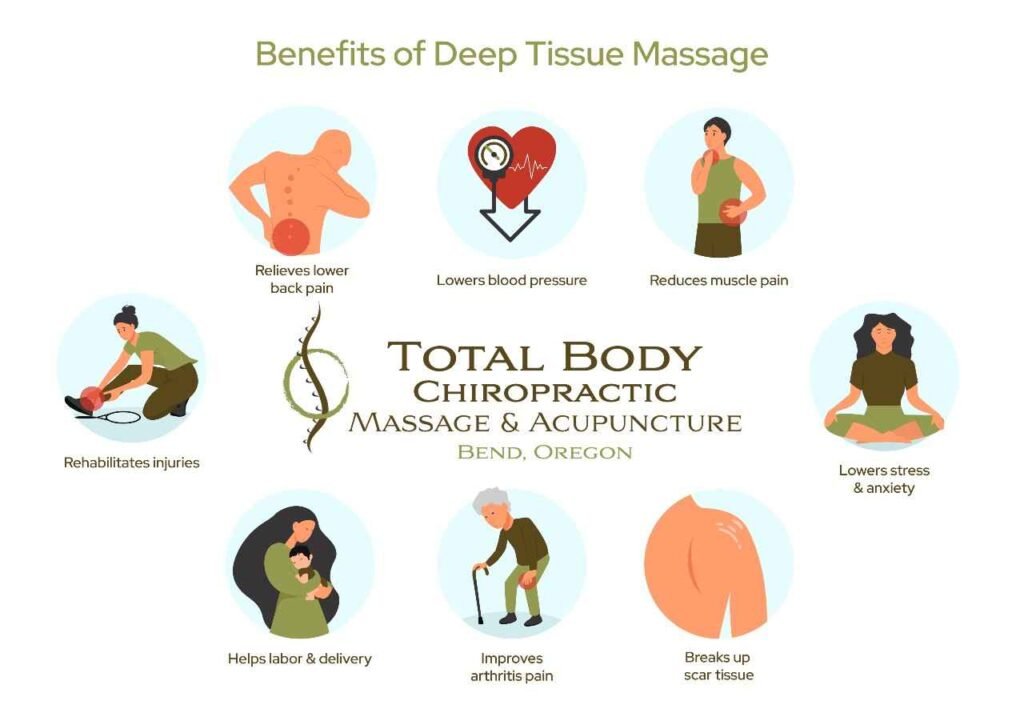
Relieve Chronic Muscle Pain
Reaching the deeper tissue layers where long-standing tension settles offers more lasting relief than lighter techniques for persistent pain.
Reduce Muscle Tension
Regular sessions help prevent chronic tightness from building up further, particularly in areas affected by repetitive movement or poor posture.
Improve Mobility and Flexibility
Releasing tight muscle and fascia supports a fuller, more comfortable range of motion in both daily movement and athletic activity.
Speed Up Muscle Recovery
Improved circulation from deep tissue work helps clear metabolic waste from worked muscles, shortening the recovery window after physical strain.
Improve Posture
Releasing chronically tight muscles in the chest, shoulders, and lower back makes it easier to hold a more balanced, upright posture over time.
Reduce Stress
While not the primary goal, deep tissue massage still triggers the same stress-reducing physiological response as other massage styles, particularly once the initial pressure eases into release.
Who Should Try Deep Tissue Massage?
Office Workers
Hours in a fixed seated posture build tension in the neck, shoulders, and lower back — exactly the areas deep tissue is designed to address.
Athletes
Regular training puts repeated stress on the same muscle groups, and deep tissue work helps manage that load while reducing injury risk.
Fitness Enthusiasts
Anyone training regularly, even recreationally, can benefit from the recovery and mobility support deep tissue provides between sessions.
Business Travelers
A home or in-room massage service fits deep tissue work into a packed schedule without needing to leave the hotel between meetings.
People with Chronic Back or Neck Pain
Deep tissue is one of the most commonly recommended techniques for long-standing, non-acute pain in these areas.
Common Areas Treated
Neck and Shoulders
The most frequently treated area, given how much tension builds here from desk work, screen time, and stress.
Upper and Lower Back
A common source of chronic discomfort, particularly for those with sedentary jobs or heavy training schedules.
Hips and Glutes
Often overlooked, but a frequent source of tightness for both office workers and athletes, particularly runners.
Legs and Calves
Especially relevant for athletes and anyone on their feet for long periods, where tightness builds from repeated strain.
Arms and Forearms
Less commonly requested but valuable for anyone doing repetitive manual work or heavy gym training.
Deep Tissue Massage vs Other Massage Techniques
Swedish Massage
Swedish focuses on relaxation through lighter, flowing strokes, while deep tissue targets chronic tension with firmer, slower pressure. See our Swedish Massage Bahrain guide for more detail.
Sports Massage
Sports massage overlaps significantly with deep tissue but is specifically structured around training cycles — priming muscles before activity and speeding recovery afterward. More in our Sports Massage Bahrain guide.
Thai Massage
Thai massage combines stretching and compression, performed fully clothed, whereas deep tissue focuses purely on manual pressure into the muscle itself. Full guide: Thai Massage Bahrain.
Hot Stone Massage
Hot stone uses heat to help muscles release faster, often allowing for effective deep work with less perceived intensity than standard deep tissue. See our Hot Stone Massage Bahrain guide.
Is Deep Tissue Massage Painful?
It can feel intense, particularly in areas carrying significant tension, but it shouldn’t be sharply painful. A skilled therapist works gradually, allowing the muscle to release rather than forcing through resistance, and adjusts pressure based on your feedback throughout the session. Some soreness afterward — similar to post-workout muscle fatigue — is normal and typically settles within a day.
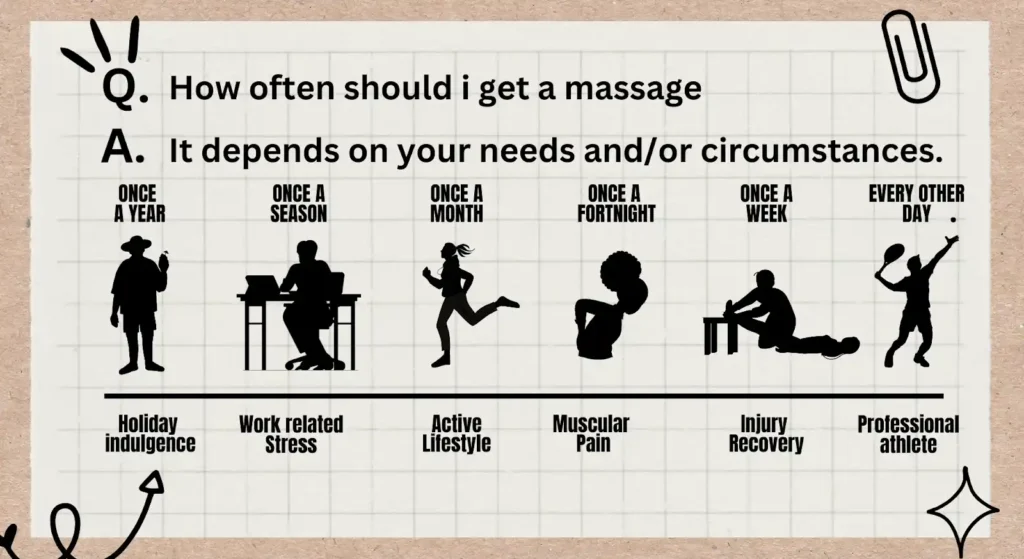
How Often Should You Get a Deep Tissue Massage?
This depends on how much tension you’re carrying and your activity level. For chronic tightness or heavy training loads, sessions every one to two weeks tend to deliver the most consistent results. For general maintenance or occasional tension, once a month is often enough to keep things from building back up.
Tips for Getting the Best Results
Stay Hydrated
Drinking water before and after a session helps your body process the effects of deep tissue work, particularly given the intensity of the technique.
Communicate with Your Therapist
Speak up about pressure level and any discomfort during the session — deep tissue in particular benefits from real-time adjustment rather than pushing through silently.
Stretch After Your Session
Light stretching after a deep tissue massage helps maintain the improved range of motion the session creates.
Allow Time for Recovery
Avoid intense exercise immediately after a session, and give your body a day or so to fully settle before your next hard training block.
Frequently Asked Questions
What are the benefits of deep tissue massage?
Relief from chronic muscle pain, reduced tension, improved mobility, faster recovery, and better posture over time.
Is deep tissue massage painful?
It can feel intense but shouldn’t be sharply painful — communicating your comfort level to the therapist keeps pressure effective without being unbearable.
Who should get deep tissue massage?
Anyone managing chronic tension, muscle tightness from training or desk work, or recovering from physical strain.
How often should I get deep tissue massage?
Every one to two weeks for chronic tightness or heavy training, roughly monthly for general maintenance.
Is deep tissue massage good for back pain?
Yes, it’s one of the most commonly recommended techniques for long-standing, non-acute back pain.
Can athletes benefit from deep tissue massage?
Yes, it’s widely used to manage training load, improve mobility, and speed up recovery between sessions.
How long does a session last?
Sixty minutes is the most common length, giving enough time for full-body work; 90 minutes suits more widespread tension.
What should I do after a deep tissue massage?
Drink water, avoid intense exercise immediately afterward, and allow a day or so for your body to fully settle.
Are there any side effects?
Mild soreness or fatigue is common, particularly after a first session, and typically resolves within a day.
Where can I book a deep tissue massage in Bahrain?
Visit Lotus Massage Bahrain to book directly.
Final Thoughts
Deep tissue massage earns its reputation through technique, not just intensity — slow, targeted pressure applied correctly reaches tension that lighter styles can’t touch. Whether you’re managing chronic pain, recovering from training, or simply overdue for real muscular relief, understanding how the technique works makes it easier to get genuine value from every session. For pricing details and comparisons, see our Deep Tissue Massage vs Sports Massage and Deep Tissue Massage FAQ guides. Ready to book? Visit Lotus Massage Bahrain.
Lotus Massage Bahrain
Whatsapp: +97334095899
Website: https://massagebahrain.xyz/
Address: Road Number 2426, Manama 340, Bahrain