Moroccan massage is often described simply as “a hammam and a massage,” but the specific steps involved — steam, black soap, exfoliation, then oil massage — are what actually give the treatment its distinct effect. This guide goes deeper into the mechanics of how a Moroccan massage session actually unfolds, what makes each step effective, and how the overall experience compares to Arabic, Swedish, Thai, and deep tissue massage.
For pricing and where to book, see our main Moroccan Massage Bahrain guide. If you’re deciding between traditional styles, our Moroccan Massage vs International Massage Styles guide covers that comparison too.
What Is Moroccan Massage?
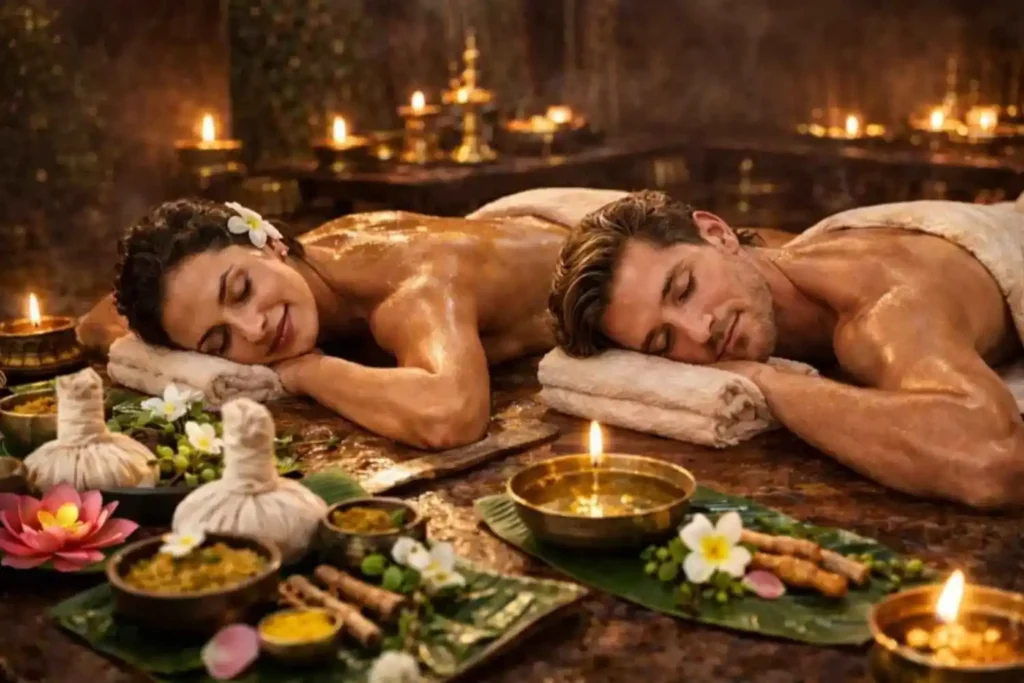
Moroccan massage is a multi-step treatment combining a traditional hammam ritual — steam, black soap, and exfoliation — with a full-body oil massage performed afterward. Unlike most massage styles, which focus entirely on the muscles, Moroccan massage treats the skin itself as a core part of the treatment, not just a surface the massage happens to be performed on.
The Origins of Moroccan Massage
The hammam ritual at the center of Moroccan massage developed over centuries as both a hygiene practice and a social tradition across Morocco and the wider region, historically performed in communal steam bathhouses. Massage was traditionally added at the end of the ritual, once steam and exfoliation had already prepared the body, rather than functioning as a standalone treatment on its own.
How Moroccan Massage Works
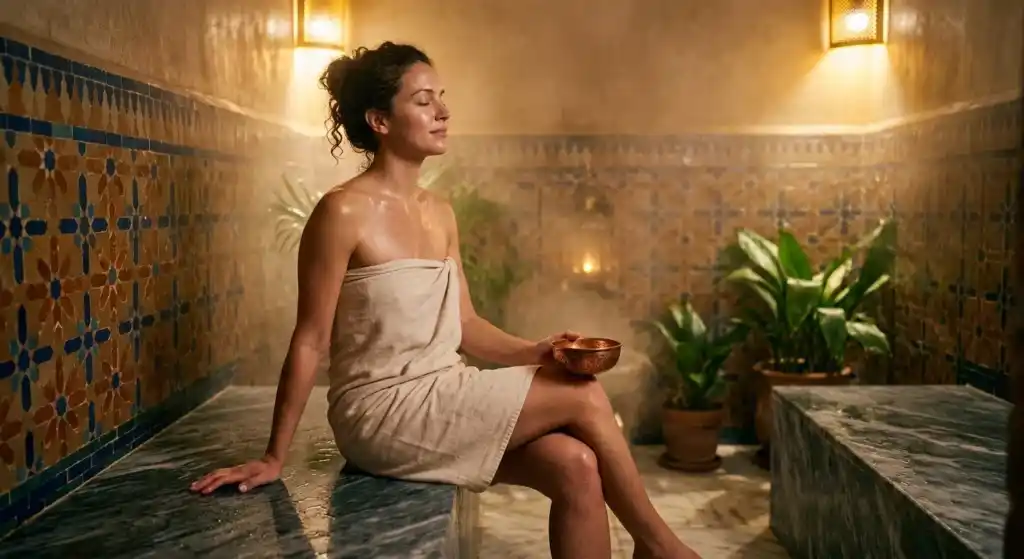
Steam and Heat Preparation
The session begins in a heated, humid steam room, where warmth and moisture work together to open pores and soften the skin — a necessary first step that makes the exfoliation that follows significantly more effective than it would be on dry, unprepared skin.
Traditional Black Soap (Beldi Soap)
A traditional black soap, typically made from macerated olives, is applied across the body and left to sit briefly. It’s specifically formulated to help loosen dead skin cells ahead of scrubbing, rather than functioning as a standard cleansing soap.
Kessa Glove Exfoliation
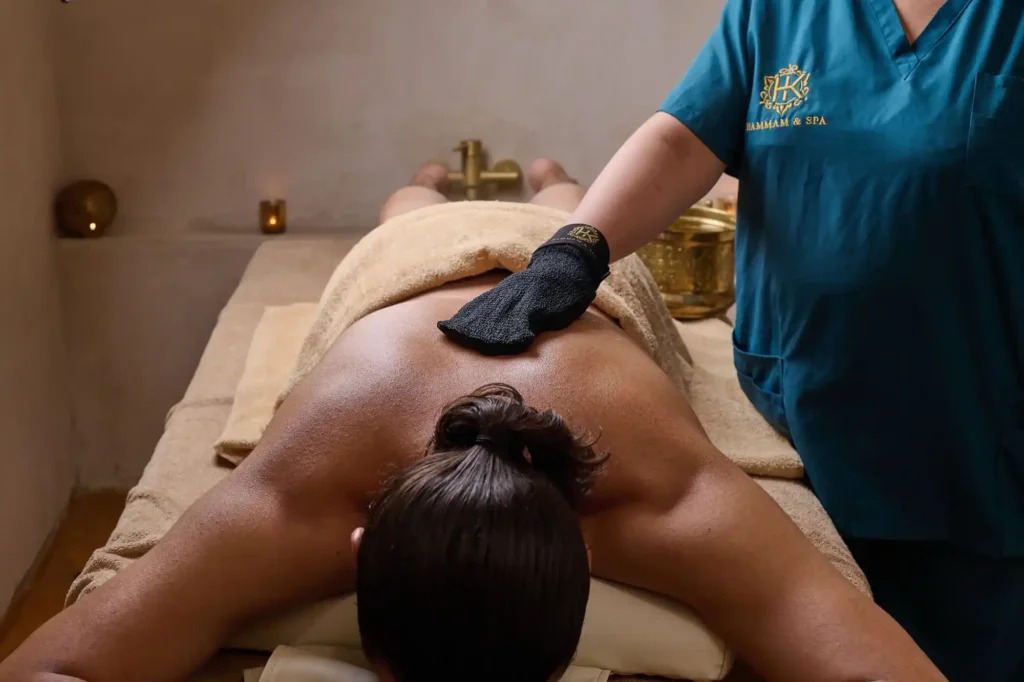
A textured exfoliating mitt, the kessa glove, is used to scrub the body firmly once the black soap has softened the skin. This step is the most physically noticeable part of the ritual, and it’s what produces the smooth, renewed feeling Moroccan massage is best known for.
Argan Oil Massage
Once the skin has been exfoliated, a full-body massage follows using argan oil or a similarly nourishing oil, which both relaxes the muscles and helps replenish moisture to the freshly exposed skin.
Relaxation Techniques
The massage portion typically uses long, flowing strokes designed to build on the relaxation already established during the steam and exfoliation phases, rather than introducing a sharply different pace or pressure style.
Benefits of Moroccan Massage
Deeply Cleanse the Skin
The combination of steam and black soap penetrates far more effectively than a regular shower, clearing pores and preparing the skin in a way most other massage styles don’t address at all.
Remove Dead Skin Cells
The kessa glove scrub physically removes built-up dead skin, a benefit unique to Moroccan massage among the traditional styles commonly offered in Bahrain.
Improve Blood Circulation
The combined effect of steam heat and massage strokes stimulates circulation more noticeably than a standalone massage, supporting faster physical recovery from general fatigue.
Relieve Muscle Tension
The argan oil massage that follows the hammam addresses general muscular tightness, particularly through the back, shoulders, and legs, in much the same way a standard oil massage would.
Promote Relaxation
The extended, multi-step structure of the ritual tends to produce a deeper, more sustained sense of relaxation than a single shorter treatment, simply due to the length and variety of the experience.
Nourish and Hydrate the Skin
Argan oil applied after exfoliation absorbs more effectively into freshly renewed skin, leaving it visibly smoother and better hydrated than oil applied without the preceding hammam ritual.
Who Should Try Moroccan Massage?
Office Workers
Beyond the usual muscle relief from massage, the skin-renewal aspect gives office workers a more complete reset than a standard massage alone.
Business Travelers
For travelers with a genuinely free afternoon or evening, the full ritual offers a more substantial break from a demanding schedule than a quick standalone massage would.
Tourists Visiting Bahrain
Moroccan massage gives visitors a distinctive, hands-on way to experience a regional wellness tradition, well beyond a generic international spa treatment.
Men Looking to Relax
Many providers in Bahrain offer dedicated men’s hammam sessions, making the full ritual accessible for men specifically seeking both relaxation and skin renewal.
Women Seeking Skin Care and Wellness
The visible skin benefits make Moroccan massage particularly popular among women looking for a treatment that delivers noticeable results beyond relaxation alone.
Couples
Some hotel spas offer the hammam-and-massage ritual as a shared couples experience in adjoining treatment spaces.
Common Moroccan Massage Techniques
Moroccan Hammam Ritual
The overall structure — steam, black soap, exfoliation, then massage — is the defining technique of Moroccan massage, distinguishing it from any style that skips straight to the massage itself.
Body Exfoliation
Exfoliation via the kessa glove is performed methodically across the entire body, working in sections rather than randomly, to ensure even results.
Oil Massage
Argan oil is applied generously during the massage phase, both to ease the strokes and to actively nourish the skin, functioning as much as a skincare step as a massage medium.
Gentle Muscle Relaxation
The massage strokes themselves are generally moderate rather than intense, chosen to complement the deep relaxation already built up during the earlier steam and exfoliation phases rather than introduce a jarring shift in sensation.
Skin Hydration
A final layer of oil or, at some providers, a hydrating body cream is applied at the end of the session to lock in moisture after the exfoliation and massage are complete.
Moroccan Massage vs Other Massage Styles
Arabic Massage
Arabic massage shares some overlap with the massage portion of a Moroccan treatment — both use warmed oil and flowing strokes — but Arabic massage doesn’t include the hammam and exfoliation ritual that defines Moroccan massage. See our Arabic Massage Bahrain guide for more detail.
Swedish Massage
Swedish massage is a lighter-pressure, massage-only treatment with no exfoliation or steam component, making it a shorter and generally more affordable option than a full Moroccan hammam and massage. Our Swedish Massage Bahrain guide covers what to expect.
Thai Massage
Thai massage is performed without oil, on a mat, with active stretching rather than the passive, flowing massage found at the end of a Moroccan treatment. The two styles differ significantly in both technique and overall pacing. See our Thai Massage Bahrain guide for more.
Deep Tissue Massage
Deep tissue massage concentrates intense, targeted pressure on specific problem areas, with no skin-renewal component at all. Moroccan massage is a broader wellness ritual, while deep tissue is a more clinical, corrective treatment. See our Deep Tissue Massage Bahrain guide for details.
Is Moroccan Massage Painful?
Moroccan massage is generally not painful, though the kessa glove exfoliation step can feel quite firm compared to a standard massage, particularly on more sensitive skin. Most guests describe the scrubbing sensation as intense but not painful, and the massage that follows is typically performed at moderate, comfortable pressure. If you have particularly sensitive skin, it’s worth mentioning this to your therapist before the exfoliation step begins.
How Often Should You Get a Moroccan Massage?
Because the exfoliation benefits last longer than the effects of a standard massage alone, many regular clients book a Moroccan massage every four to six weeks rather than as frequently as a relaxation-only massage. More frequent exfoliation than this can be too abrasive for some skin types, so spacing sessions out is generally recommended.
Tips for Getting the Best Results
Drink Plenty of Water
Hydrating before and after your session supports both the detoxifying effect of the steam and hammam ritual and general recovery from the massage itself.
Moisturize After Treatment
Freshly exfoliated skin absorbs moisturizer particularly well in the hours after treatment, making it worth applying a light, unscented moisturizer at home that evening.
Avoid Heavy Exercise Immediately After
Freshly exfoliated skin can be more sensitive to sweat and friction, so it’s generally worth avoiding intense exercise for the rest of the day following treatment.
Follow Your Therapist’s Advice
If your therapist recommends avoiding direct sun exposure or specific products for a day or two afterward, it’s worth following that guidance given the skin sensitivity involved in the exfoliation step.
Frequently Asked Questions
What is Moroccan massage?
Moroccan massage is a multi-step treatment combining a traditional hammam ritual — steam, black soap, and kessa glove exfoliation — with a full-body oil massage performed afterward.
What is the difference between Moroccan massage and Moroccan Hammam?
Moroccan Hammam refers specifically to the steam and exfoliation ritual, while Moroccan massage generally includes that ritual plus a full-body massage afterward. Some providers offer the hammam alone without the massage component.
What are the benefits of Moroccan massage?
Moroccan massage combines deep skin cleansing, exfoliation, and improved circulation with muscle relaxation, offering a broader wellness benefit than a standard massage alone.
Is Moroccan massage suitable for beginners?
Yes, though first-timers should expect a more involved, multi-step experience than a standard massage, including a firm exfoliation step before the massage itself begins.
Is Moroccan massage painful?
No, though the kessa glove exfoliation can feel quite firm, especially for those with sensitive skin. The massage portion afterward is typically performed at comfortable, moderate pressure.
How long does a session last?
Most full hammam-and-massage sessions run 60 to 90 minutes, with longer 120-minute options available at some luxury hotel spas.
How often should I get a Moroccan massage?
Many regular clients book every four to six weeks, since the exfoliation benefits last longer than the effects of a standard relaxation massage.
What products are used during treatment?
Traditional black soap and a kessa exfoliating glove are used during the hammam portion, followed by argan oil or a similar nourishing oil during the massage.
Can tourists get Moroccan massage in Bahrain?
Yes, Moroccan massage and hammam treatments are widely available across massage centers and hotel spas in Bahrain, and many tourists specifically seek it out as a distinctive wellness experience.
Where can I book Moroccan massage in Bahrain?
See our main Moroccan Massage Bahrain guide for pricing and provider options, or browse our area guides for Juffair, Manama, and Seef.
Final Thoughts
What sets Moroccan massage apart from every other traditional style covered in this guide is the exfoliation ritual that comes before the massage — it’s a genuinely different experience from a standard oil massage, combining visible skin benefits with the usual muscle relaxation. For pricing details and provider recommendations, head back to our main Moroccan Massage Bahrain guide, or compare it directly against other traditions in our Moroccan Massage vs International Massage Styles guide.
Ready to book? Visit Lotus Massage Bahrain to compare options and reserve your treatment.
Lotus Massage Bahrain
Whatsapp: +97334095899
Website: https://massagebahrain.xyz/
Address: Road Number 2426, Manama 340, Bahrain